
Newsletter
|
Mar 27, 2026
Infrastructure is quickly becoming the next hurdle for AI
Copy Link

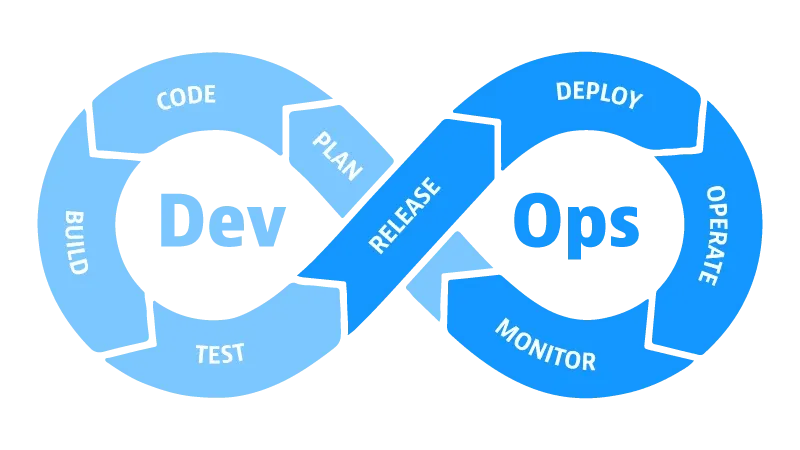
DevOps is a set of practices, philosophies, and tools that combine software development with IT operations. Historically, these two disciplines were separate and often at odds, with developers writing up code and “throwing it over the wall” to the operations teams who were forced to manage the implementation and deployment. Over time, the software industry drew inspiration from lean manufacturing, adopting principles like continuous improvement, waste elimination, and bottleneck identification that allowed software to move through an organization with the same efficiency that raw materials flow through a production line.
DevOps consists of multiple components, including, version control, continuous integration/continuous deployment (CI/CD), infrastructure procurement and management, and observability. All of these components are leveraged across software development from video games to SaaS. Currently, DevOps is undergoing radical change with the adoption of AI, and this week we want to focus on what DevOps is, how it’s changing, and how we expect to see this evolve in the future.
Writing code is only the first part of the software development process. This typically takes place in an Integrated Development Environment (IDE) like Cursor or Visual Studio Code. After this, the individual developer's code is submitted to the version control system (VCS) that manages the code for the entire organization. The code that's stored in the VCS still needs a way for customers to access it. To make sure it's customer-ready, it goes through a series of building and testing in the CI/CD process.
Once approved, it is ready to be deployed onto the infrastructure that will allow users around the world to engage with the software. Here the code is managed, updated over time, and monitored.
The DevOps space is enormous and encapsulates multiple billion-dollar enterprises. So instead of covering every change, we want to highlight a few parts in this process that we see changing rapidly, and the tools that are emerging to solve these problems.
Code: This is what most people think of when they think of software development, writing the actual code. This process has undergone a radical change, with some of the best developers in the world saying they have shifted from 20% AI code and 80% human code to the other way around.
We are also seeing individual engineers manage AI agents and those agents managing other agents. This has created such a high volume of code that traditional systems have started to break down. For example, Git has seen so many outages that OpenAI decided to build its own version control system (VCS).
Interestingly, game development has had a similar problem in recent years. As games have grown in size and complexity, the team size required to create them has grown and this volume of code has caused modern version control systems to have massive outages at AAA studios. They cite the same scalability issues, which led to our investment in Diversion, a cloud-native, highly scalable version control system, which is now also being used in AI development to manage agents at scale.
Build & Test: Another problem created by the vast amount of code being generated is that it becomes nearly impossible for the human code review system to keep up. This has led to the proliferation of AI-native code review tools.
Again, the game industry saw this problem first. The infinite number of possible outcomes in a video game makes comprehensive human testing impossible, and is one of the biggest reasons for multiple disappointing AAA game releases over the past handful of years. Some of the first AI tools we saw were built for QA in-game development (letting AI agents control characters and play games over and over, which is far more scalable than finding humans to do it).
Deploy: Finally, DevOps has been leaning into edge deployments to reduce latency and costs for AI workflows. This constant battle against latency is well known in the gaming space, and informed our investment in Edgegap, which helps deploy edge servers for multiplayer games. Latency has also been an uphill battle for most cloud game streaming platforms, such as Google’s Stadia (closed down in 2023). Over time, GeForce Now has improved the efficiency of these systems, but even now, the console experience is still better.
This has been an interesting technical dilemma to observe from the AI perspective. We believe that both solutions (cloud and edge) will have a place in the stack, which has informed our recent investment in a company enabling the deployment of on-premise simulations and LLMs.
One of the meta themes that we have consistently seen as AI proliferates throughout the DevOps process is the idea of abstraction. Abstraction is the tendency to hide technical complexity behind simpler interfaces over time. Developers are becoming increasingly removed from the technical details due to the benefits of the abstraction layer.
This has been taking place since the very beginning of development: abstracting away from zeros and ones, to creating new coding languages, frameworks, graphical user interfaces (GUIs), no-code solutions, and most recently abstracting all of code to just natural language.
And while this process is still maturing in DevOps, we have already seen this play out in the gaming space. As more and more people have been able to create games, a handful of things occur that we are keeping an eye on as they pertain to AI:

Takeaway: AI is collapsing the cost of writing code, but in doing so, it is shifting the bottleneck downstream. As code volume explodes, the real constraints become review, testing, deployment, and discovery. We have seen this before in gaming: more creators did not simplify the ecosystem; it made infrastructure, tooling, and distribution more important. The next generation of DevOps winners will not be defined by helping developers write code, but by controlling what happens after it’s written; how it’s validated, deployed, observed, and discovered.


.png)


.webp)
.webp)
.webp)
.webp)
.webp)
.webp)
.webp)
.webp)

.webp)
.webp)
.webp)
.webp)
.webp)
.webp)
.webp)