
Newsletter
|
Jun 26, 2026
Scalability can be found in software, hardware, and the messy in between
Copy Link

.webp)
The robotics space is evolving rapidly, with conversations currently revolving around data quality, humanoids versus specialized robots, and where value accrues in the ecosystem. This week, we want to take a 5,000-ft view of the space, identify the major categories of the robotics landscape, provide some preliminary views on value accrual to those categories, and identify the major roadblocks the industry will likely face moving forward.
Hardware & Components: These are the physical components that make up the robot. This could include everything from actuators to chips to the nuts and bolts that keep everything together. While there are exceptions to the rule, this is the part of the stack that is most likely to be commoditized. Often, value lies not in the components themselves but in the expertise required to pull them together into a functioning, useful artifact. However, recent supply chain constraints within the industry, with a revised focus on U.S.-sourced parts specifically in the defense industry, have opened up opportunities for tech-enabled manufacturers to carve out a niche of this enormous market.
Robot Platforms & Form Factor: This bucket refers to the robots themselves, some taking humanoid form while others take the form of specialized robots. We have written about where the industry stands on this bifurcation, and the answer is likely somewhere in the middle. In the near term, it is very hard to separate the hardware from the end application, and there is likely a segment of skills that will never be separated from the hardware form factor due to their complexity and edge cases. We think value accrual in the near term (next 3-5 years) will be for specialized form factors, and in the long term (10+ years) will be for generalized platforms like humanoids.
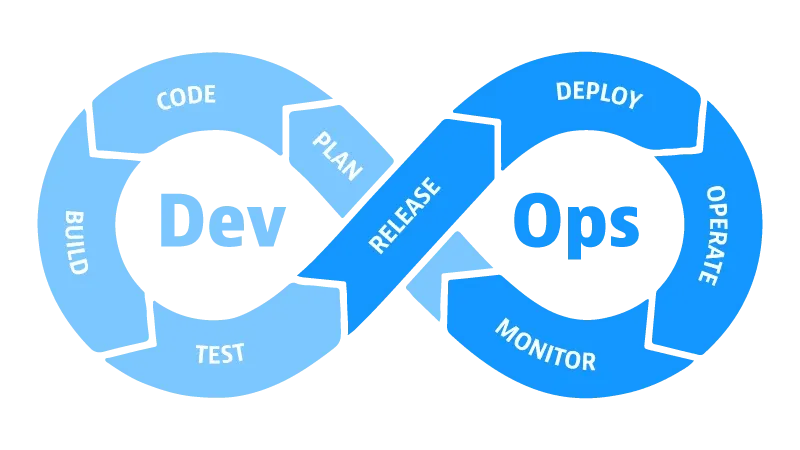
Developer Tools & Middleware (Includes Simulation & Digital Twin): This bucket includes everything from hardware-focused IDEs to the Robot Operating System (ROS) open-source software commonly used to build in robotics. Konvoy has spent a large amount of time in and around the DevOps space and we believe that the qualities that accrue value in the software development lifecycle are likely to translate here. Specifically, platforms that are deeply embedded into developer workflows (creating data or governance moats, and network effects) will increase switching costs.
Perception & Sensing: This is how a robot sees and feels its surroundings (the cameras, LiDAR, radar, IMU, gyroscope, accelerometer, and touch sensors that take in information, plus the software that turns that information into a picture the robot can act on). Whether value accrues here is unclear because this layer is getting squeezed from both sides. From below, the sensors themselves are getting cheap, so the hardware is commoditizing just like the components bucket. From above, the AI world models are ingesting and processing this data at rapid rates. These models now know how to go straight from raw camera input to action in one step.
AI & Autonomy Software: This part of the stack is arguably the hottest right now for fundraising, with companies building world models that understand physics well enough to let robots interact with the physical world without explicit instructions. Many companies are attempting to build out datasets for these models, training on specific tasks. Others are creating their own models, and the jury is still out on whether or not they will trend towards commoditization in the same way that many LLMs are doing today.
Application Layer: These are the tasks that the robots will inevitably complete and, as mentioned above, are currently difficult to separate from the platforms themselves. Over time, we expect a marketplace of robot apps to be downloadable for generalized platforms (like humanoids), but this will be limited to skills with limited edge cases where failure is not catastrophically detrimental or where specialized hardware is required.
Fleet Management & Orchestration: Lastly, how you manage fleets of robots, monitor their health, update them, or manage their location is equivalent to the observability platforms like Datadog in DevOps. These platforms are capable of accruing enormous value.
Robotics startups have raised $18.8 billion in 2026, compared to $15 billion in the full year of 2025, and while a significant amount of talent and capital is being dedicated to this industry, there are still major hurdles to overcome before robots are widespread.
So how does the industry move forward while navigating each of these roadblocks? There seem to be three paths:
From an investment perspective, the challenge for each of these buckets is determining what is able to scale at a clip that is capable of large-scale returns. Unlike software, we are now forced to navigate complex manufacturing processes, bill of materials risks, and global supply chain concerns in a way that never existed when software was at the core of the market.
Takeaway: The robotics landscape continues to evolve, and there is a tension between hardware and software. While there are segments of the stack that will likely be pure software plays, much of the innovation is taking place in the messier middle ground. Data moats, switching costs, and network effects, which are the cornerstones of any large business that accrue value over time, are being derived from the physical world. That is what makes this market harder than the software cycles that came before it. Defensibility still exists, but it will have to be earned through mastering manufacturing and supply chains. We are excited to meet the teams, figuring out how to build those moats.


.webp)

.webp)

.webp)
.webp)
.webp)
.webp)
.webp)
.webp)
.webp)
.webp)
.webp)
.webp)
.webp)
.webp)
.webp)
.webp)