
Developer tools and infrastructure are the foundation of how modern software gets built, deployed, and scaled. Konvoy backs founders building the platforms, tools, and systems that support secure, scalable software development, from cloud infrastructure to automation and integration.

Developer Tools & Infrastructure
Deep Tech & Hardware
Invested:
April 2026
Location:
To be announced
High-performance computing software
Stealth

Developer Tools & Infrastructure
Deep Tech & Hardware
Invested:
September 2025
Location:
San Francisco, California
tscircuit is building a code-based EDA solution to bridge the gap between software and hardware engineers.
tscircuit

Developer Tools & Infrastructure
Invested:
May 2025
Location:
To be announced
Web-based OS
Stealth

Developer Tools & Infrastructure
Gaming & Consumer Platforms
Invested:
March 2025
Location:
San Francisco, CA
Diversion is an intuitive version control system built on a modern tech stack for speed, scalability, and efficiency.
Diversion

Developer Tools & Infrastructure
Gaming & Consumer Platforms
Invested:
June 2024
Location:
To be announced
Autonomous game development
Stealth

Developer Tools & Infrastructure
Gaming & Consumer Platforms
Invested:
October 2023
Location:
Singapore, Singapore
k-ID offers a platform that enhances online safety for children and parents and reduces risks for developers and publishers.
k-ID

Developer Tools & Infrastructure
Invested:
March 2023
Location:
Sydney, Australia
A terabit-scale, encryption-proof customer insights platform for telecoms with real-time network traffic analytics.
Canopus Networks
.avif)
Gaming & Consumer Platforms
Developer Tools & Infrastructure
Invested:
February 2023
Location:
Schenectady, New York
The Rocket Science Group specializes in co-development, platform, publishing tech, and live ops for console, PC and mobile.
Rocket Science

Developer Tools & Infrastructure
Gaming & Consumer Platforms
Invested:
August 2022
Location:
San Diego, CA
ByteBrew is an all-in-one mobile analytics platform that is focused on helping developers grow their games.
ByteBrew


Tools and platforms that become embedded in engineering workflows, driving long-term adoption and deep integration across development teams.
Cloud, automation and data systems that power efficiency, reliability and secure operations for organizations of any size.
Platforms that learn from usage, automate decision-making and compound value through continuous data feedback.
We’re also open to other Enterprise Technology fields.
Explore insights across the Developer Tools & Infrastructure landscape. We break down how developer platforms and cloud systems are evolving, the tools enabling large-scale software performance, and the emerging patterns shaping the future of modern development.
Oops! There is no content matching your search. Try using different filters
Oops! There is no content matching your search. Try using different filters
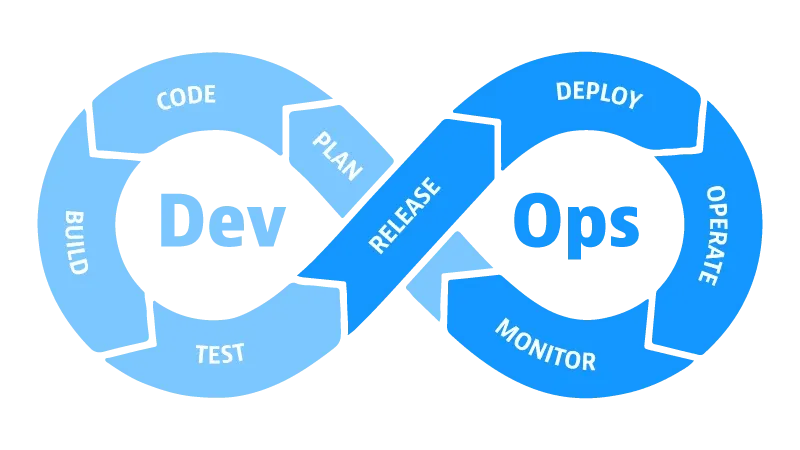
DevOps has been refined over the past 30 years and certain parts will need to adapt for the robotics ecosystem. Observability, CI/CD, deployment, and infrastructure will all likely need to evolve to cater to robotics.
We have seen a broad shift to open source technologies as large enterprises attempt to avoid vendor lock-in, are focused on improving security, and are building more custom solutions. We are also excited about the benefits that these technologies gain from community contribution.
Version control systems have been pivotal in managing code, but as the digital landscape pivots towards more complexity, traditional version control platforms show their limitations. While solutions like Perforce have made strides in adapting to these needs, there remains room for improvement and innovation. As we look to the future, integrating features such as improved storage and cloud-native functionality could significantly enhance efficiency and collaboration.
The race is on for innovators and established players alike to craft a service that not only meets the current demands of large file asset management but also sets the stage for future advancements, potentially transforming how we store, manage, and analyze digital assets in a rapidly evolving digital world.
Formal Proof / Solver Based Simulation: These are tools that are embedding domain-specific logic and mathematical solvers to formally validate AI outcomes. Especially relevant for critical industries that can't settle for non-deterministic outputs.
Physics-based Simulations: These AI tools embed the laws of physics governing a specific domain and implement that solution within an enterprise
Digital Twins: Tools creating replicas of unique assets and simulating the impact of stimulus.
Agent-Based Simulations: These are tools that use agents to emulate real people or entities to help understand how they will react to stimulus. This category can be thought of as decision co-pilots.
The current wave of digital instability highlights a critical paradox: we have traded independence for speed, security, and efficiency of global cloud consolidation. While hyperscalers have democratized high-end computing, the resulting architecture means single errors now trigger massive, cascading blackouts across our essential infrastructure. As a result, 2026 is becoming the year when both governments and enterprises aggressively adopt multi-cloud solutions, edge computing, and on-premise repatriation to ensure that a single cloud failure does not lead to total operational paralysis.
Local AI is gaining traction thanks to advances in specialized hardware and more efficient inference, making models deployable directly on devices.
This is resulting in stronger privacy, lower latency, and offline capability for everyday applications. Local processing enables users to customize AI for sensitive, real-time scenarios, while avoiding ongoing cloud fees; however, it remains limited by hardware constraints and higher initial setup costs.
Meanwhile, cloud AI centralizes inference on powerful remote servers, lowering barriers for experimentation and scaling with pay-as-you-go pricing, which is ideal for large datasets and collaborative teams.



.webp)
.webp)
.webp)
.webp)
.webp)

.webp)


.avif)
.avif)
.avif)
.avif)

.avif)
.avif)
.avif)
.avif)
.avif)


