
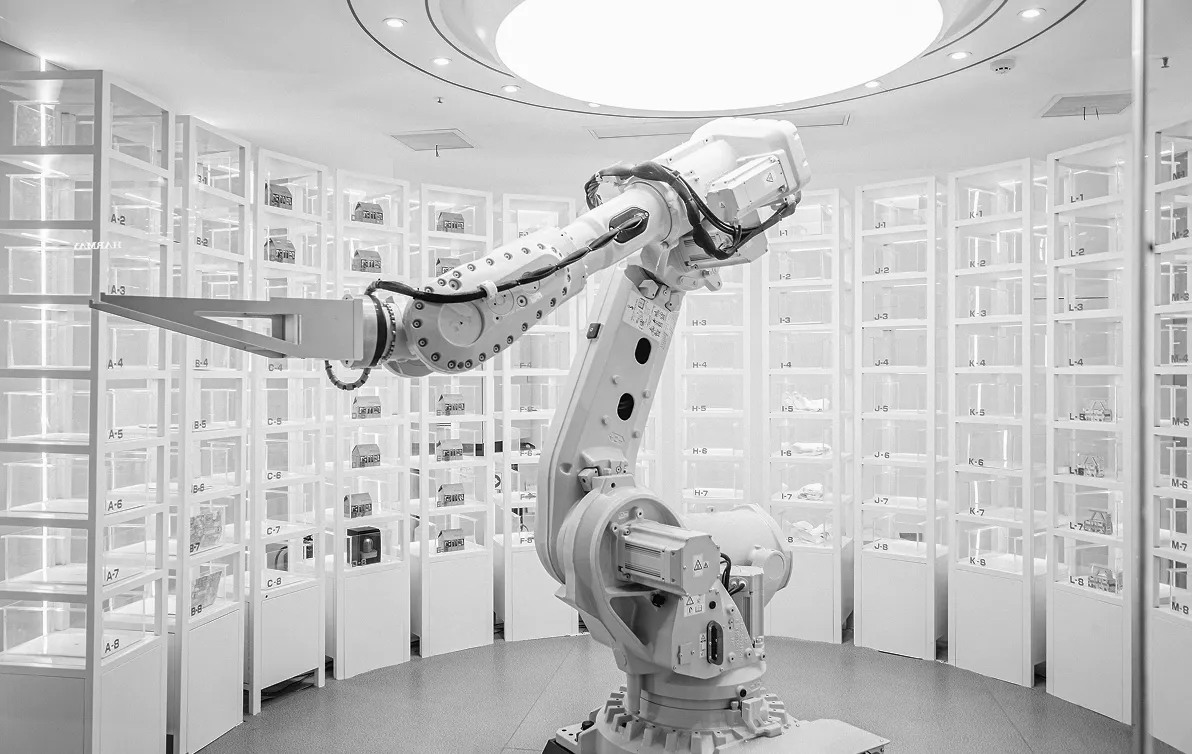
Deep tech and hardware are entering a new phase, where breakthroughs in robotics, sensors, connectivity, and AI move from software into the physical world. Konvoy backs founders building the machines, devices, and systems that act on reality, unlocking automation, improving real-world efficiency, and powering the next generation of industrial innovation.
Critical Industries
Deep Tech & Hardware
Invested:
June 2026
Location:
To be announced
Long range modular glider systems
Stealth

Critical Industries
Deep Tech & Hardware
Invested:
May 2026
Location:
Los Angeles, CA
Aerospace actuation systems
Stealth
Developer Tools & Infrastructure
Deep Tech & Hardware
Invested:
April 2026
Location:
To be announced
High-performance computing software
Stealth
Critical Industries
Deep Tech & Hardware
Invested:
January 2026
Location:
Denver, CO
Lux Aeterna is developing the world's first fully reusable satellite fleet in space.
Lux Aeterna

Critical Industries
Deep Tech & Hardware
Invested:
January 2026
Location:
San Diego, California
Autonomous Surface Vehicles
Seasats

Critical Industries
Deep Tech & Hardware
Invested:
October 2025
Location:
To be announced
Remote forestry operations
Stealth

Developer Tools & Infrastructure
Deep Tech & Hardware
Invested:
September 2025
Location:
San Francisco, California
tscircuit is building a code-based EDA solution to bridge the gap between software and hardware engineers.
tscircuit

Deep Tech & Hardware
Invested:
May 2024
Location:
Seattle, WA
Ixana is shaping the future of wireless communication through human body communication (HBC).
Ixana

Deep Tech & Hardware
Invested:
April 2023
Location:
To be announced
Augmented reality infrastructure
Stealth0423
.png)
Deep Tech & Hardware
Gaming & Consumer Platforms
Invested:
November 2022
Location:
Boulder, CO
Afference creates tactile sensations during digital interactions with an unobtrusive wearable device using neural stimulation.
Afference

Physical hardware systems that enable automation, sensing and computation across industries.
Deep tech innovation that moves from research to real-world application, benefiting from specialized manufacturing and global distribution advantages.
Devices that combine sensors, chips, and AI to process data closer to where it’s generated, improving speed, reliability, and on-device decision-making.
We’re also open to other Hardware fields.
Explore insights across the Deep Tech & Hardware landscape. We cover how breakthrough science and physical technologies are evolving, which systems are enabling large-scale automation, and where the next generation of hardware innovation is emerging.
Oops! There is no content matching your search. Try using different filters
Oops! There is no content matching your search. Try using different filters
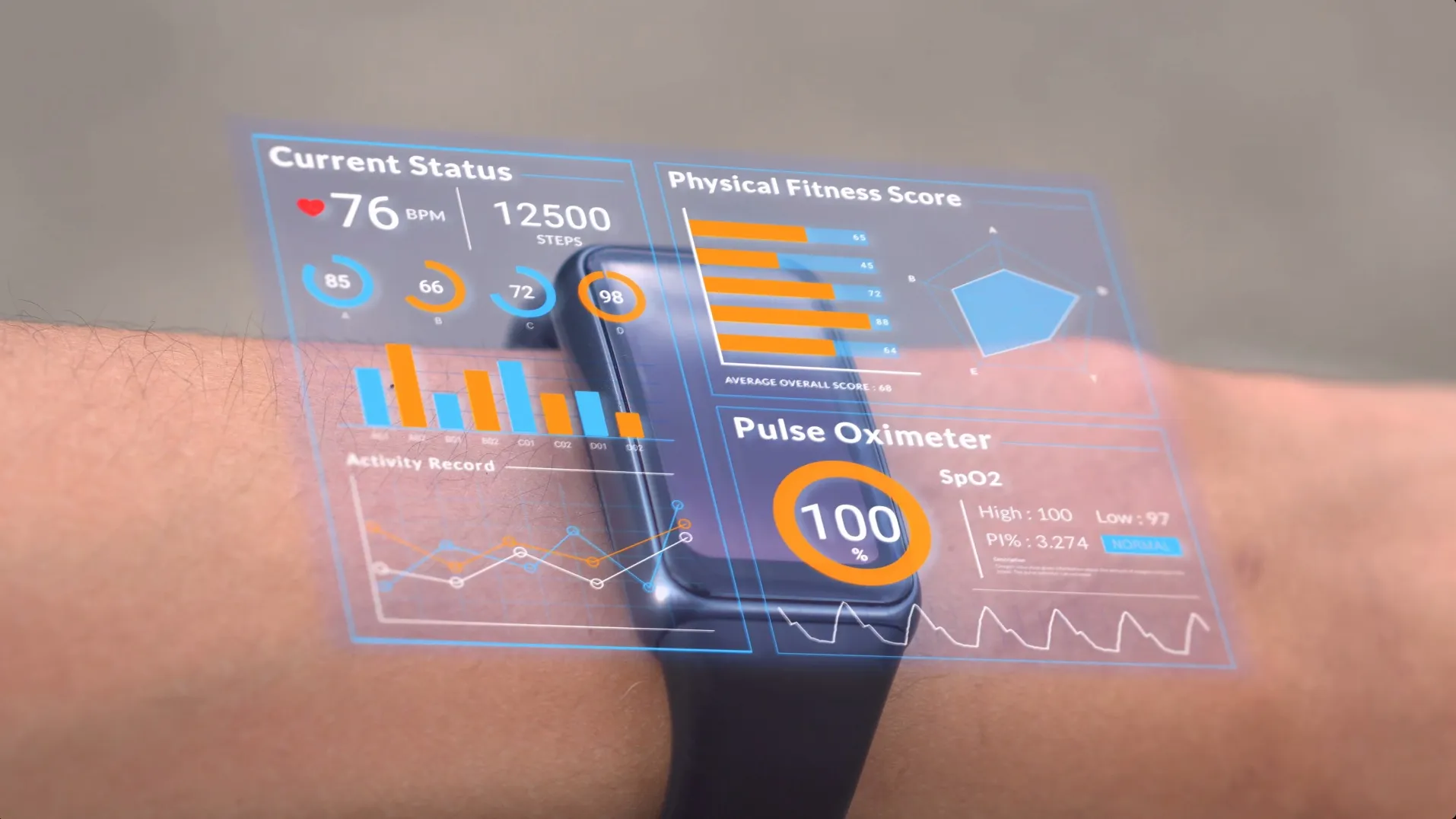
Wearables are the proof case for consumer hardware acting on the physical world. Oura's $875m Series E at a $10.9bn valuation tracked almost 1:1 with unit sales — 5.5m rings sold to date, 3m in the last year alone — while Whoop doubled down on athletes with medical-grade ECG and blood pressure features. The real story is where differentiation goes next: on-device AI for private, real-time health coaching, XR interfaces that make biometrics glanceable, and longevity tech that extends devices from tracking into prevention. The risk Konvoy flags: much of the growth runs through corporate wellness contracts, and it's unclear how much of that reflects genuine user stickiness versus employer-mandated adoption.
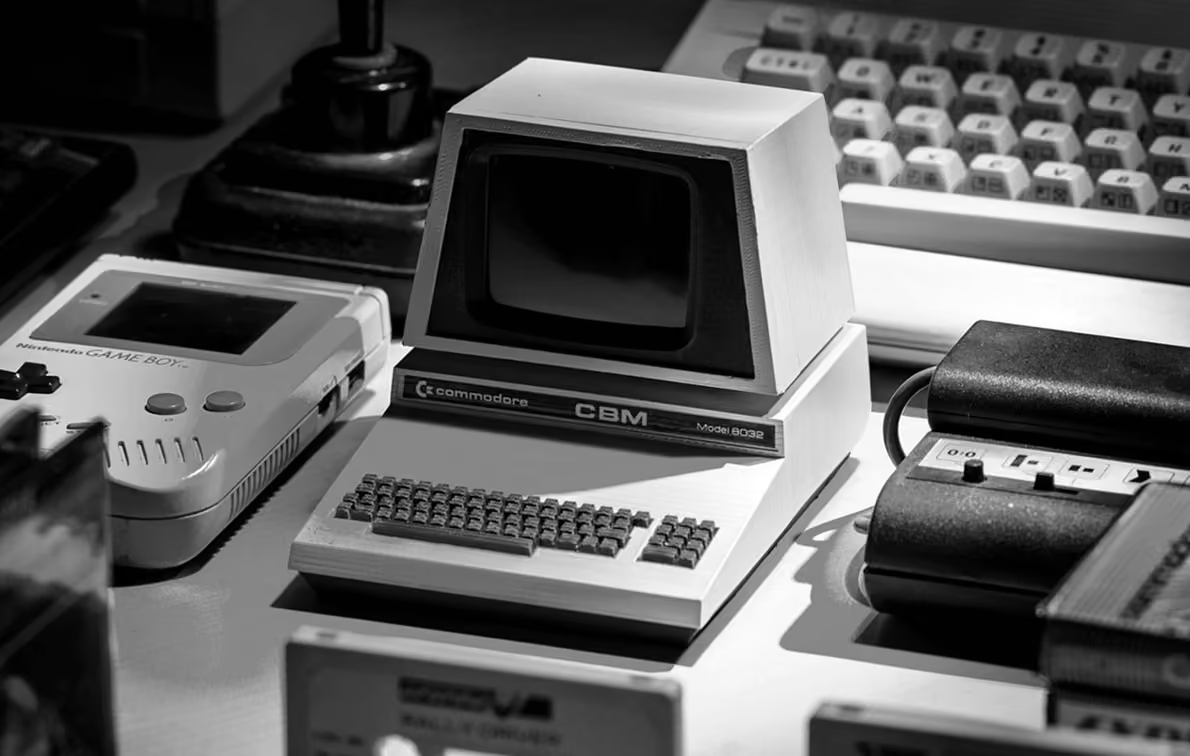
Hardware is only as valuable as the software ecosystem that runs on it. Apple pre-sold 200k Vision Pro headsets ($700m in revenue), yet launched with just 150+ apps versus 1.8m on iPhone, held back by high development costs, fee frustrations, and high-profile platform opt-outs. Konvoy frames it as a literal prisoner's dilemma: developers collectively have leverage to force friendlier terms, but the moment some capitulate and build, the rest must follow or miss the market. With ~$20b invested and 5k+ patents filed, Apple needs developers more than developers need Apple — for now.
Touch is the missing sense in spatial computing. As headset makers like Apple and Meta abandon physical controllers for hand and eye tracking, they strip out the haptic feedback that made digital interaction feel real — creating an opening for a new device category. Konvoy's bar for a winning haptic solution is mobile, transparent, and universal, which is the thesis behind their pre-seed lead in Afference, a wearable neural interface that uses electrical signals rather than pressure to communicate sensation directly through the skin, connecting to any spatial computing platform.
Robotics is scaling on gaming's rails. Just as Unreal and Unity gave digital-world builders pre-packaged tooling, the open-source Robot Operating System (ROS) has streamlined robotics development enough to allow innovation at scale — and the crossover runs deeper: game engines generate the synthetic training data robots learn from (Figure.ai uses this approach to train robots to walk). With NVIDIA projecting a $38bn humanoid market by 2035, Konvoy is looking at robotics in all its forms, from simulation software to physical robots serving industries well beyond games.
Affective computing — sensors that measure human emotion — has the measurement problem largely solved but the distribution problem wide open. Games are an ideal lab because biomarkers can be linked to gameplay in a controlled environment, but no killer application has emerged: emotion-reactive content risks landing as a novelty or a gimmick, and startups face incumbents' distribution advantages and data troves. The nearer-term path to consumer scale is fusing emotional data with other health metrics — effectively making it a feature of the wearables stack above rather than a standalone product.


.webp)
.webp)
.webp)


.webp)
.webp)
.webp)

.webp)
.webp)
.avif)


