
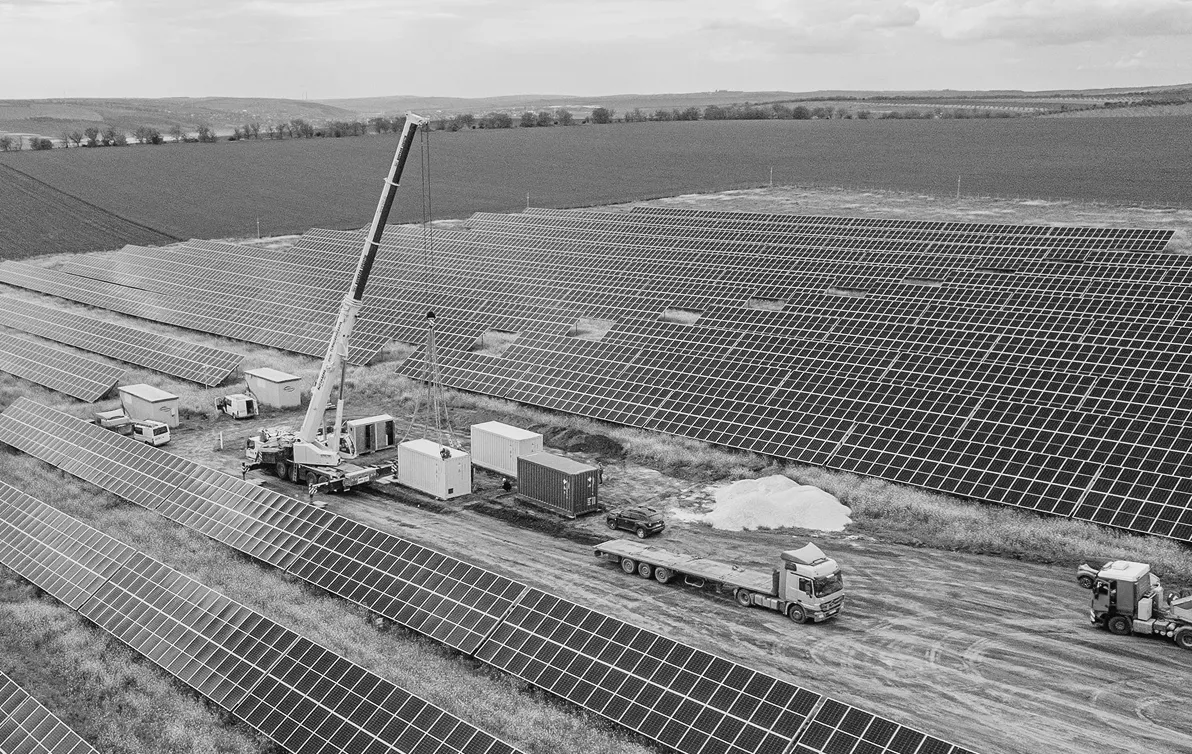
Konvoy backs early-stage founders across critical industries: defense and national security, energy generation and grid, advanced manufacturing and industrial automation, supply chain and logistics, and critical materials and semiconductors.
These sectors are being rebuilt on modern software and advanced hardware after decades of underinvestment, driven by reshoring, supply chain risk, and rising defense spending amid global instability. We invest where technical depth is the moat and the stakes are national.
Critical Industries
Deep Tech & Hardware
Invested:
June 2026
Location:
To be announced
Long range modular glider systems
Stealth

Critical Industries
Deep Tech & Hardware
Invested:
May 2026
Location:
Los Angeles, CA
Aerospace actuation systems
Stealth
Critical Industries
Deep Tech & Hardware
Invested:
January 2026
Location:
Denver, CO
Lux Aeterna is developing the world's first fully reusable satellite fleet in space.
Lux Aeterna

Critical Industries
Deep Tech & Hardware
Invested:
January 2026
Location:
San Diego, California
Autonomous Surface Vehicles
Seasats

Critical Industries
Deep Tech & Hardware
Invested:
October 2025
Location:
To be announced
Remote forestry operations
Stealth

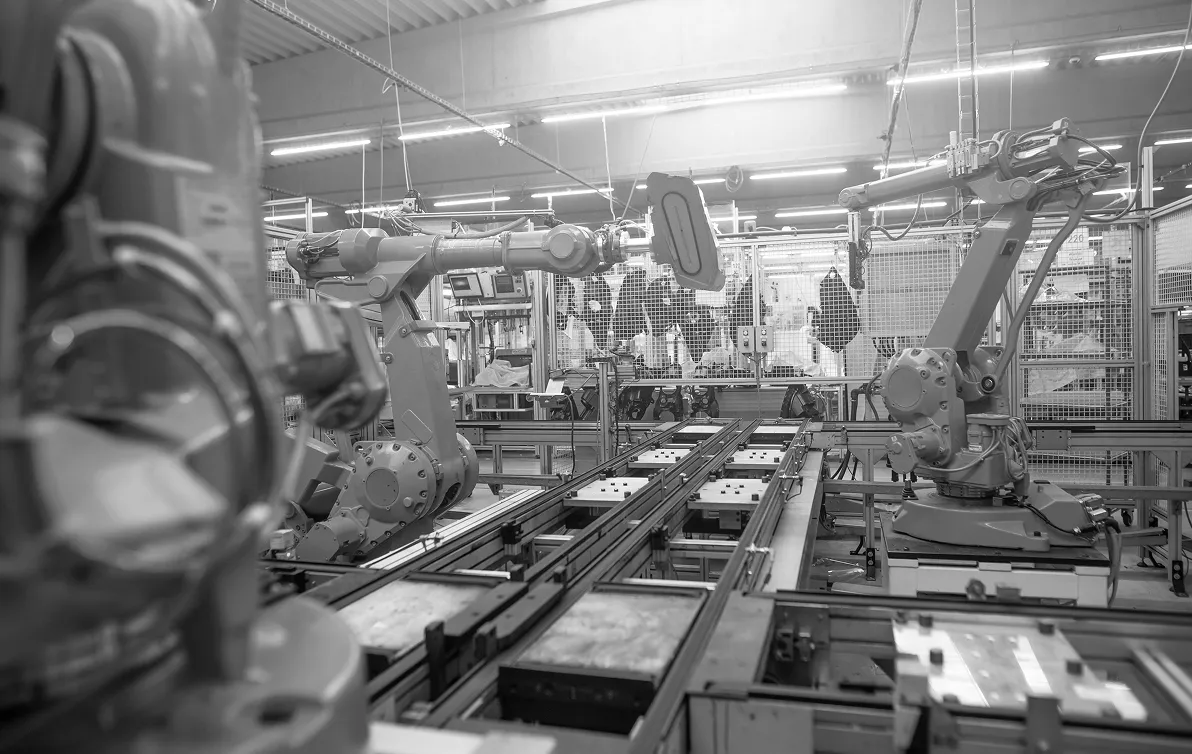
Reshoring, supply chain risk, and rising defense budgets are forcing a generation of deferred modernization that will play out over decades
These markets reward founders who solve hard engineering and regulatory problems that incumbents are structurally unable to touch, which makes early leads durable and switching costs high.
When the customer is a defense agency or national infrastructure operator, contracts are long, revenue compounds, and the companies that win become permanent fixtures.
We’re also open to other Critical Industries.
Our research across the critical industries we invest in: defense, energy, aerospace, robotics, semiconductors, and supply chains. Weekly newsletters, deep dives, and investment announcements on the technologies rebuilding critical industries.
Oops! There is no content matching your search. Try using different filters
Oops! There is no content matching your search. Try using different filters
Facing China's projected crossover past U.S. naval combat power around 2027, the Navy is pivoting to a "Hybrid Fleet" of unmanned surface and underwater vessels rather than matching China hull-for-hull. The industrial logic is stark: a modern carrier now takes 8 to 10 years to deliver, versus 17 months for the USS Midway in 1945, and Congress has put $1 billion into the "Replicator" program to field thousands of attritable drones. This is the shift Konvoy backed directly through SeaSats.
New reactor licensing effectively froze after the 1979 Three Mile Island accident, which was fully contained, caused no deaths, and exposed nearby residents to roughly one-sixth of a chest X-ray. While the U.S. stalled, France reached about 67% nuclear and China has commissioned 57 reactors since 1991. Capital is now flooding back: nuclear investment rose from about $360 million in 2020 to $4.8 billion in 2025, driven not by climate goals but by the power that AI data centers require.
The constraint is almost never the mine. China refines 91% of rare-earth magnets and produces 94% of them despite mining only about 60%, and a single Japanese firm, Ajinomoto, holds over 95% of the build-up film that insulates high-performance chip substrates. The chokepoints are mostly self-inflicted: markets left to erode, capacity allowed to concentrate abroad, and workforces never trained, which is why glass-core substrates and domestic refining are the interesting shots on goal.
The 52-year overland flight ban targeted the sonic boom, not speed, and a June 2025 executive order directed the FAA to repeal it. Denver-based Boom is the commercial flagship: its XB-1 broke the sound barrier in January 2025, the first independently developed civil aircraft to do so, and its Overture airliner holds 130 orders targeting 2029 service. The defense side is a catch-up sprint, since China and Russia already field operational hypersonics that the U.S. cannot yet reliably match.
Robotics startups raised $18.8 billion in 2026, up from $15 billion in all of 2025, but hardware margins and supply-chain risk make this harder than the software cycles before it. The durable moats come from data, switching costs, and fleet orchestration earned by mastering manufacturing, not from components, which commoditize. Konvoy's portfolio company Kodama illustrates the winning pattern: tele-operation in logging that captures data now to reach autonomy later.


.webp)
.webp)

.webp)


.webp)
.webp)
.webp)
.webp)
.webp)
.webp)
.webp)
.webp)
.webp)
.webp)



.avif)
